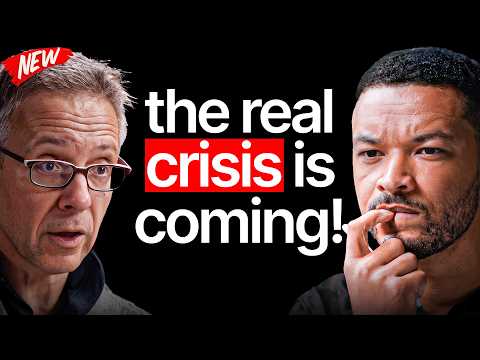
The Anti-Woke Expert: “We Are Witnessing The Fall Of The UK & The USA!” - Konstantin Kisin
TL;DR
- Wokeness has lost its original meaning and become a tool for division and victimhood rather than addressing genuine inequality
- A victim mentality, while sometimes encouraged by society, can become self-destructive and undermine personal agency and resilience
- Men are struggling due to a lack of clear role models and purpose in a society that has become increasingly hostile to traditional masculine values
- Western nations face serious threats from unchecked debt, ideological division, and the erosion of free speech principles that underpin democratic societies
- The West's global dominance is declining while authoritarian regimes like China and Russia gain influence, partly due to internal cultural weakness
- Complex policy issues like immigration, climate change, and taxation require honest trade-off discussions rather than ideological denial of difficult realities
Key Moments
Episode Recap
In this episode, Konstantin Kisin engages Steven Bartlett in a wide-ranging conversation about the state of Western civilization, cultural decline, and the ideological forces shaping modern society. Kisin, speaking from the unique perspective of someone who escaped Soviet communism, argues that the West is experiencing a dangerous fall driven by the corruption of progressive ideals into what he calls wokeness. He explains that the term has lost all meaningful definition and instead functions as a weapon for political labeling and division. Rather than addressing genuine systemic problems, modern wokeness has created a victim mentality that paradoxically harms those it claims to help by undermining personal agency and resilience. Kisin distinguishes between legitimate concerns about inequality and the current manifestation of victimhood culture, which he argues has become self-destructive. The conversation turns to men's issues, where Kisin identifies the lack of positive role models and a cultural atmosphere that has become increasingly hostile toward masculinity as core problems. He suggests that combat sports appeal to men because they provide structure, hierarchy, and a clear sense of purpose that modern society fails to offer. Beyond cultural issues, Kisin raises alarm about the West's material decline, including unsustainable government debt that will disproportionately burden younger generations. He criticizes what he calls brainwashing through institutional capture by Marxist ideologies and the erosion of free speech, particularly through social media censorship and legal persecution for online expression. The discussion addresses whether the West will remain dominant in the next decade, with Kisin expressing skepticism and warning about the rise of China and Russia as alternative world powers. He critiques the Biden administration's handling of the southern border and challenges the denial of trade-offs inherent in immigration policy. Throughout the episode, Kisin emphasizes the need for honest conversations about difficult realities, whether regarding climate change, taxation, immigration, or national decline. He calls for a return to calling men back into positive roles and rebuilding social cohesion around shared values rather than perpetual victimhood and division. The conversation reflects Kisin's central thesis that the West is undermining itself through ideological capture and loss of the principles that historically made it strong and attractive to immigrants.
Notable Quotes
“We are witnessing the fall of the UK and the USA because we have lost the principles that made us great”
“Victimhood has become a form of self-harm dressed up as progress and social justice”
“Wokeness is not about equality anymore, it is about power and control through language and labeling”
“Men need something to belong to, something to fight for, and modern society has taken that away from them”
“The West is committing suicide by refusing to have honest conversations about trade-offs and difficult realities”
Products Mentioned
Books
An Immigrant's Love Letter to the West
Best-selling book by Konstantin Kisin offering a critique of modern Western culture from the perspective of someone who escaped Soviet oppression.
View on Amazon →
Media
TRIGGERnometry Podcast
Co-hosted by Konstantin Kisin, a podcast featuring conversations on politics, culture, and current events.
Visit Site →