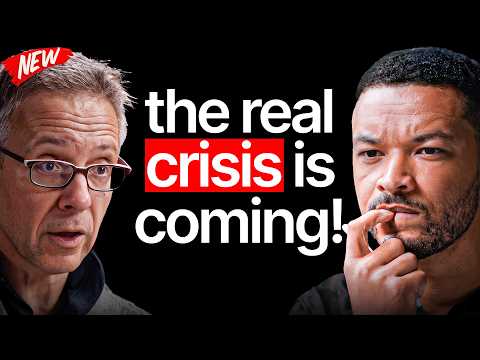
Simon Sinek: "Strong Thigh Muscles = More friends", This Is Why You Can't Make Friends!
TL;DR
- The epidemic of loneliness stems from lost role models and the deterioration of friendship-building skills in modern society
- Friendship quality, not romantic relationships, is the strongest predictor of longevity and human wellbeing
- National service and in-person community experiences are crucial for developing the bonds and social skills younger generations lack
- The rise of individualism and digital connection has replaced the vulnerability and acts of service that create real friendships
- Young people need mentorship focused on contribution and purpose rather than validation-seeking through status or material success
- Difficult conversations and storytelling are undervalued tools for genuine human connection in both personal and professional settings
Key Moments
Episode Recap
In this episode, Simon Sinek discusses the critical friendship crisis facing modern society and its devastating impact on human wellbeing. He opens by reflecting on the times we're living in, noting that we've lost strong role models who once guided younger generations. This absence has created a void that extends into our ability to form and maintain meaningful friendships. Sinek argues that despite loneliness becoming a widespread epidemic, there's surprisingly little demand for friendship therapy, indicating a cultural blindness to this essential human need. He defines what truly constitutes a friend versus an acquaintance, emphasizing that real friendship requires vulnerability and mutual investment. The conversation reveals that longevity research consistently shows friendship quality is the most important metric for a long, healthy life, surpassing factors like exercise or diet. Sinek posits that we've collectively lost the skill of making friends, a capability that was once naturally developed through shared experiences and community structures. He advocates strongly for national service programs as a mechanism to rebuild these skills, arguing that mandatory shared experiences create the bonds and sense of belonging that younger generations desperately need. The discussion shifts to the importance of belief systems and how in-person connection remains irreplaceable despite remote work advances. Sinek challenges the notion that offices are outdated, suggesting they serve a crucial social function beyond productivity. Acts of service emerge as a cornerstone of genuine friendship and leadership, yet companies and individuals frequently misunderstand what true service means. The rise of individualism, while offering personal freedom, has inadvertently undermined the interdependence that creates strong communities. Sinek addresses the concerning validation-seeking behavior in young people, drawing parallels to how figures like Andrew Tate exploit this hunger for meaning. He distinguishes between the validation of insecurity and genuine affirmation, cautioning that quick fixes lead nowhere. Difficult conversations and storytelling are identified as undervalued tools for human connection that can transform both personal relationships and organizational culture. Throughout the episode, Sinek emphasizes that people are fundamentally seeking connection, purpose, and the feeling that their life matters in a larger context. He suggests that redirecting young people toward contribution and service rather than status accumulation would address many contemporary social problems.
Notable Quotes
“Friendship is not a luxury, it's a necessity for human survival and longevity”
“We've lost the skill of making friends because we've lost the structures and shared experiences that naturally build these bonds”
“Acts of service are the foundation of real friendship and leadership, yet we've reduced them to transactional corporate gestures”
“Young people are hungry for meaning and purpose, and when we fail to provide it, they become vulnerable to those who exploit that hunger”
“Our priorities are fundamentally wrong when we chase status and validation instead of connection and contribution”
Products Mentioned
Books
Start With Why
A best-selling book by Simon Sinek about discovering and communicating the purpose that drives organizations and individuals.
View on Amazon →
Books
Leaders Eat Last
Simon Sinek's exploration of how great leaders prioritize the wellbeing of their teams and create cultures of trust and safety.
View on Amazon →
Books
The Infinite Game
A book by Simon Sinek examining how to build thriving organizations by adopting an infinite mindset rather than a finite competitive one.
View on Amazon →
Books
Find Your Why
Simon Sinek's practical guide to discovering your personal or organizational purpose and using it as a compass for decision-making.
View on Amazon →